
What a catered restaurant is — and how it differs from standard catering
When people say “catered restaurant,” they mean full restaurant-level service brought to a venue of the client’s choosing. It’s not simply food delivery, and it’s not a standard buffet with a self-service spread. The difference lies in the level of service and organization: waitstaff work table-side, courses are served in sequence, and part of the cooking may take place on location.
In practice, a catered restaurant brings together three core elements:
- On-site kitchen — mobile equipment, marquee setups, or the stationary kitchen of a rented venue.
- Table service — staff who take and deliver orders, keep glasses topped up, and manage course changes.
- Restaurant-style presentation — proper tableware, full place settings, and a structured sequence of courses (cold starters, soup, main, dessert).
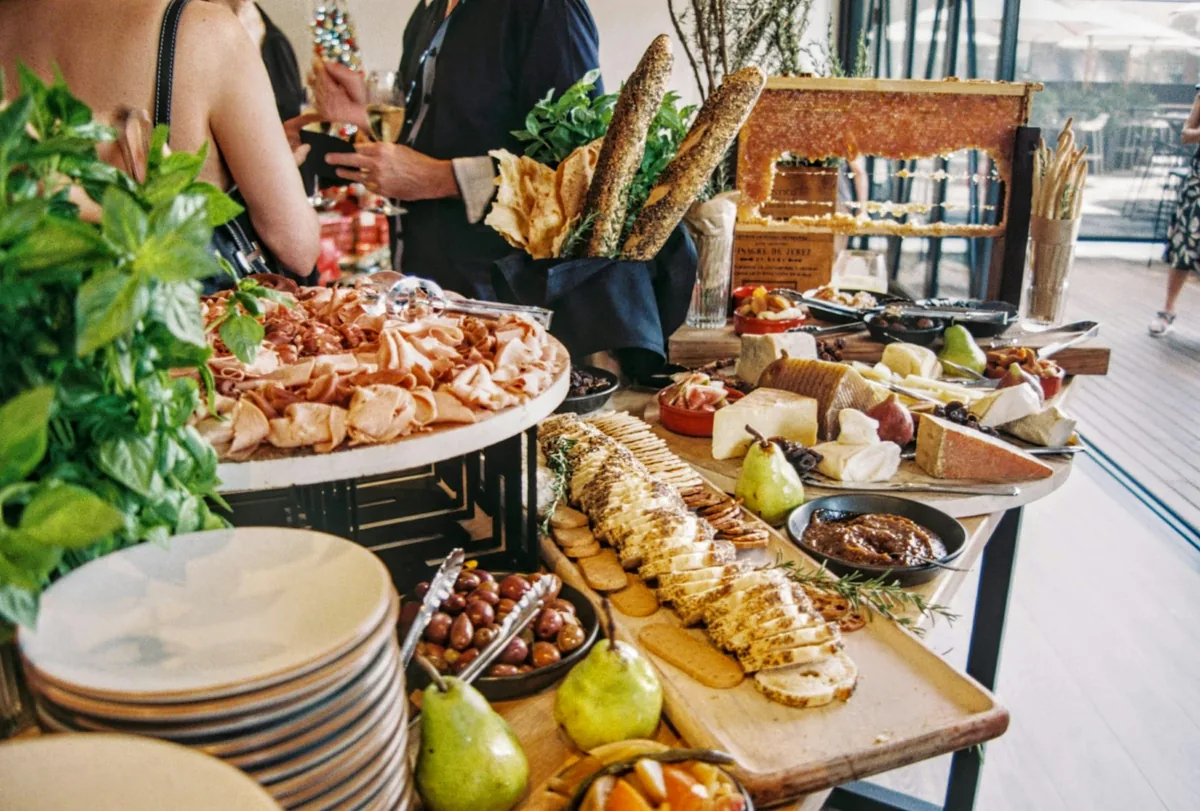
A buffet means guests serve themselves — they walk up and take what they want. With a catered restaurant, guests are seated and waitstaff bring everything to them. This fundamental difference shapes staffing calculations, logistics, and the overall budget.
When the catered-restaurant format makes sense
Not every event calls for this level of organization. There are specific situations where a catered restaurant is the logical, cost-justified choice — not just a way to make things look impressive.
- The venue has no kitchen of its own. Country estates, historic mansions, open terraces, corporate offices — these are all places where there’s nowhere to cook or store food. A mobile catering team brings its own equipment, sets up a full working zone, and handles everything from start to finish.
- Protocol-driven events. State receptions, business dinners with foreign partners, official ceremonies — these require a strict sequence of courses and personal attention to each guest. A self-service buffet simply won’t fit the occasion.
- Weddings held outside the city. Outdoor celebrations are popular around Dushanbe — near water, in mountain retreats. If the setting is stunning but the infrastructure isn’t there, a catered restaurant solves the problem entirely: from sourcing ingredients to post-event cleanup.
- VIP-format events with a small guest count. An intimate dinner for 20–40 people, where atmosphere matters more than volume, is far more elegantly handled in a restaurant format — with personal table service rather than a queue at the buffet.
- Multi-hour events with several course changes. If the program includes breaks between performances, a business segment, and a formal celebration, structured course-by-course service helps control the pace of the whole event.
What the service actually includes
Before signing off on a budget, it’s important to understand exactly what you’re paying for. A standard catered-restaurant package typically covers:
- Menu development tailored to the format and guest count
- Ingredient sourcing and delivery
- Mobile kitchen setup or on-site food preparation
- Full table setting (linens, tableware, cutlery, glassware)
- Head chef and kitchen team
- Waitstaff — as a rule, one per 8–12 guests for restaurant-style service
- Post-event cleanup of the working area
Items that may be billed separately include: furniture rental (tables, chairs, stands), décor, alcoholic beverages, and marquee or lighting hire. Always clarify this during the budgeting stage — different vendors include different line items in their base package.
Staffing and food quantities: practical benchmarks
Two questions come up more than any other: how much food is needed, and how many people does it take to run the event?
For food — standard per-guest portions in a banquet format:
- Cold starters: 200–250 g
- Hot main course: 250–300 g (including side dish)
- Bread and baked goods: 100–150 g
- Dessert: 100–150 g
- Non-alcoholic beverages: 0.5–0.7 L per person per evening
For staffing with restaurant-style service: one waiter per 8–10 guests is the working standard. For VIP-level events or complex service programs, plan for one per 6–8. You’ll also need: a bartender (if there’s a bar), kitchen support staff, and a shift manager.
Common mistakes when booking a catered restaurant
Organizers working with this format for the first time tend to make the same missteps.
- Overlooking venue logistics. Before signing the contract, verify: is there vehicle access for a delivery truck, where will the kitchen be set up, and is there sufficient electrical capacity? In Tajikistan, rural venues often have limited power supply — this directly affects equipment choices.
- Using buffet staffing ratios. For self-service, one waiter per 20–25 guests may be enough. For restaurant-style table service, that ratio doesn’t hold — you’ll need roughly twice as many staff.
- Finalizing the menu without considering the season. Dushanbe summers are hot — heavy meat dishes with rich sauces are far less appropriate than light starters, fresh vegetables, and fish. Seasonal awareness also affects how long food can safely sit on-site.
- Not building in setup time. A full catered-restaurant setup takes 3–5 hours before the event begins. If access to the venue is only granted 1–2 hours in advance, the quality of preparation will inevitably suffer.
- Leaving cleanup out of the budget. After the event, equipment has to be loaded out, tableware collected, and the work area cleared. If this isn’t written into the contract, the organizer will face unexpected additional costs.
How to tell whether a vendor is genuinely ready for this format
A few questions worth asking a catering company during initial discussions:
- Do they own their mobile kitchen equipment, or do they rent it?
- How many chefs and waitstaff can they deploy for your event?
- Do they have experience working at outdoor venues, and at what guest count?
- Who handles setup and cleanup — and is it included in the price?
- Can they provide sample menus from comparable events?
The answers will tell you whether the vendor is genuinely equipped to handle the logistics of an off-site format — or simply has it listed as a service on their website.
The bottom line
A catered restaurant is a tool for specific situations: protocol events, venues without infrastructure, intimate VIP dinners, out-of-town weddings. It’s more complex to organize than a buffet, requires more staff and careful logistics, but delivers a different level of service and control over the event. If you know exactly why you need this format, it justifies the investment. If the goal is simply to feed a large number of people within a set budget, a buffet or a traditional banquet is most likely the smarter choice.