Why the Coffee Break Deserves Its Own Attention
A coffee break is a short but vital part of any business agenda. Those 15–30 minutes are exactly when conference attendees connect informally, exchange contacts, and recharge before the next round of presentations. A poorly organized break — a long queue at the thermos, cookies that ran out, awkward table arrangements — leaves a bad impression of the entire event. A well-organized one goes almost unnoticed, simply because everything just works.
This article gets straight to the point: what a typical menu includes, how much food you need per guest, how pricing is structured, and where you can cut costs without sacrificing quality.
A Standard Coffee Break Menu
The selection of refreshments depends on the time of day, the length of the event, and the budget. That said, there is a core set of items that appears at most business conferences in Dushanbe:
- Hot beverages: Coffee (Americano or espresso from a machine) and several varieties of tea — black, green, and herbal. This is a non-negotiable staple.
- Cold beverages: Still and sparkling water, and sometimes juices. At summer events this is especially important — the heat in Tajikistan makes itself felt even in air-conditioned venues.
- Pastries and desserts: An assortment of mini cakes, muffins, cookies, or croissants. Individual portions are more practical than sliced pies, since guests can pick them up without cutlery.
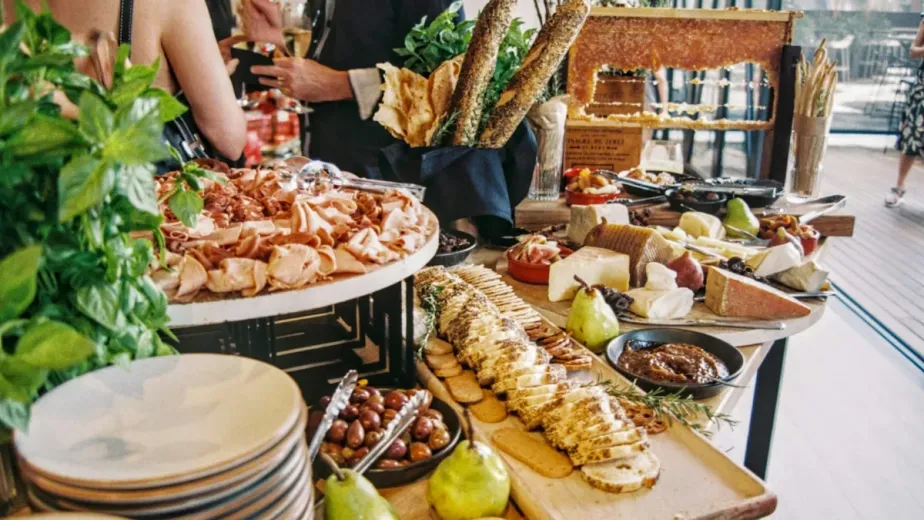
- Light snacks: Sandwiches or canapés, a fresh fruit platter, and a cheese board — particularly when the break replaces lunch or lasts longer than 30 minutes.
For a morning coffee break, the emphasis is on pastries and hot drinks. For an afternoon break, the amount of sweets is reduced and more fruit and light snacks are added instead.
Portions Per Guest
One of the most common mistakes organizers make is ordering by gut feeling. The result is either half the table left untouched, or food that runs out after the first 60% of guests have been served. Below are practical benchmarks for a standard 20–30-minute break:
- Hot beverages: 1.5–2 cups per person (keep in mind that some guests will ask for a refill).
- Water: 300–500 ml per person, depending on the season.
- Pastries / desserts: 2–3 individual pieces per person.
- Canapés or sandwiches: 3–4 pieces per person, if included in the menu.
- Fruit: 100–150 g of sliced fruit per person.
If the break runs longer than 40 minutes, or falls between morning and lunch, multiply the dessert and snack quantities by approximately 1.3.
Service Formats
There are two main formats used for conference coffee breaks.
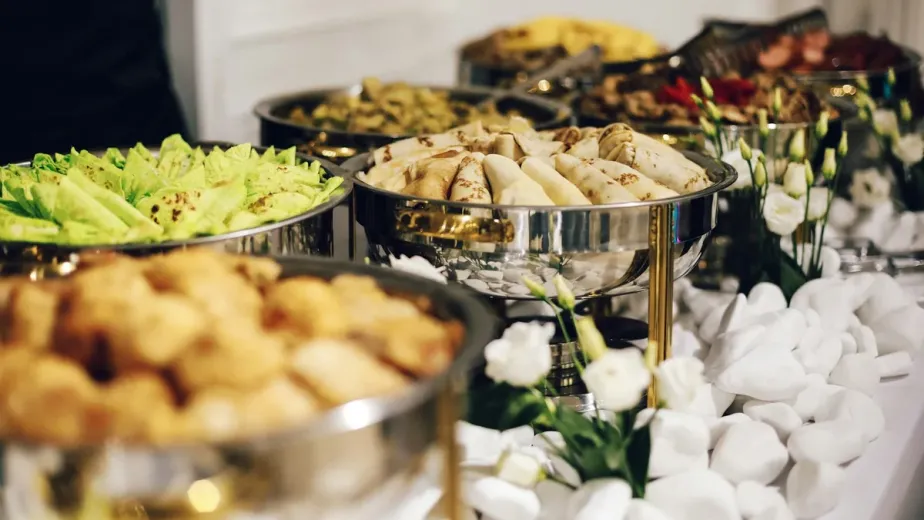
Buffet table. All items are laid out on one or more tables, and guests help themselves. This format works well for events of 20 or more people and is particularly effective when the venue allows a table to be set up alongside the main hall. The key advantage — no queues — holds as long as the table length and the number of beverage stations are calculated correctly.
Waiter service. Staff circulate through the hall or break area carrying drinks and snacks on trays. This format is more formal and suits VIP conferences, government events, or venues where a full buffet table simply cannot fit. It requires more staff — at least one waiter per 20–25 guests.
At most conferences in Dushanbe, both approaches are combined: a main food table plus waiters circulating with coffee and tea on trays. This takes the pressure off the coffee machine and speeds up service considerably.
What Drives the Cost
The per-guest price of a coffee break is made up of several components:
- Menu composition. A basic option (tea, coffee, water, cookies, pastries) costs less than an expanded one (canapés, cheese board, fruit, multiple dessert varieties).
- Equipment. If the catering company does not own a coffee machine, renting one will appear as a separate line item. Always clarify upfront what is included in the base price.
- Staff. One or two waiters for a room of 50 guests is standard. A larger guest count or a complex venue layout will increase the cost.
- Tableware and consumables. Porcelain cups and glass tumblers look more elegant but require on-site washing. High-quality disposable tableware is a perfectly acceptable compromise for events of up to 100 guests.
- On-site service fees. Delivery, setup, and post-event cleanup are standard line items in any off-site catering quote.
Common Ordering Mistakes
- Ignoring the time of day. A sweet-heavy coffee break at 4 p.m. after a filling lunch is a poor choice. Guests eat less, and the leftovers go to waste.
- Overlooking dietary requirements. If any attendees do not eat pork, or follow a vegetarian diet, let the caterer know in advance. Adding lactose-free milk or swapping out certain fillings is simple — as long as you mention it a week ahead, not on the day of the event.
- Underestimating beverage stations. One coffee machine for 80 people during a 20-minute break creates a queue. You need at least two stations, or waiters circulating with trays of drinks.
- Underreporting the guest count. It is better to order a 10% buffer than to explain to guests why the éclairs have run out.
How to Request a Quote
To receive an accurate estimate, a caterer needs the following: the number of guests, the event date and venue address, the start time and duration of the break, and your menu and service format preferences. The more precise your brief, the fewer revisions the final invoice will require.
If you are organizing a conference in Dushanbe and are just starting to work out a budget, begin with exactly these parameters. A good catering company will use them to propose several menu options with a clear cost breakdown, letting you choose the best fit without unnecessary back-and-forth calls and approvals.