What Is a Cocktail Reception and How Does It Differ from a Buffet?
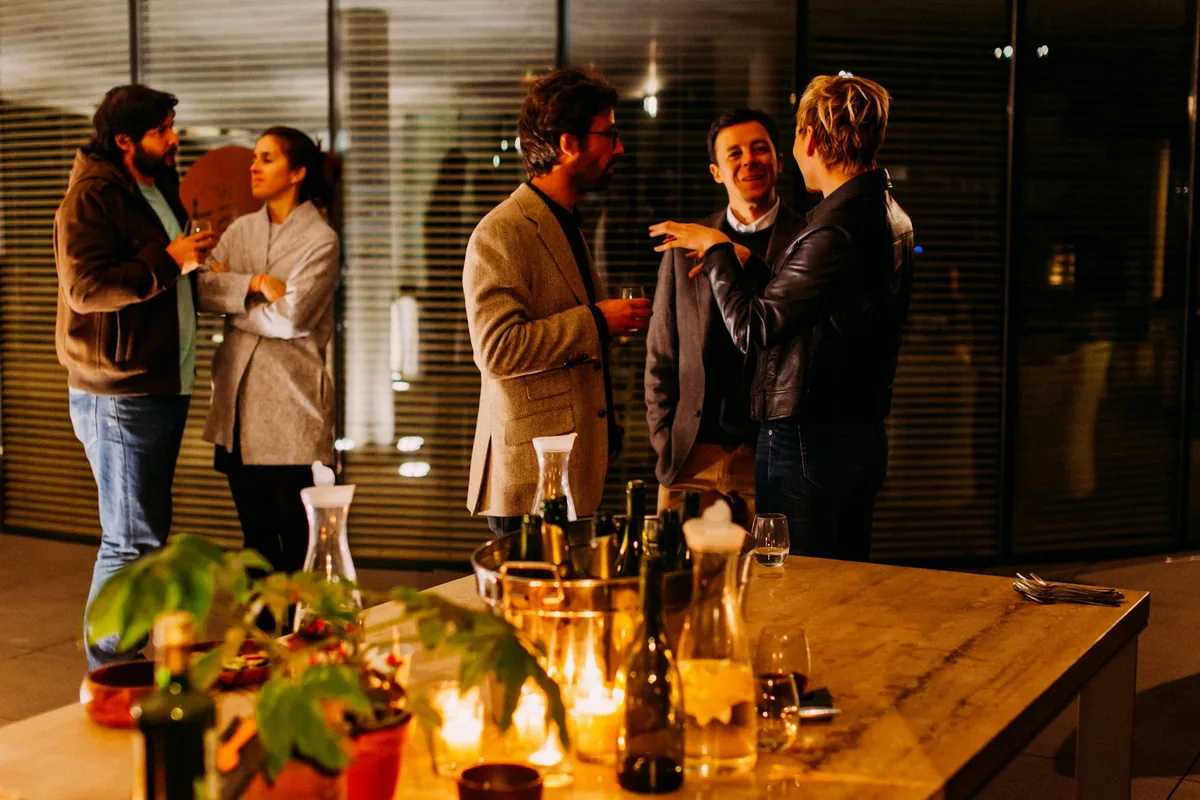
A cocktail reception is a standing event with no assigned seating. Guests move freely, mingle, and help themselves to canapés and drinks from trays or stations. The format is designed around networking: people meet, exchange contacts, and chat with speakers in a relaxed, informal setting.
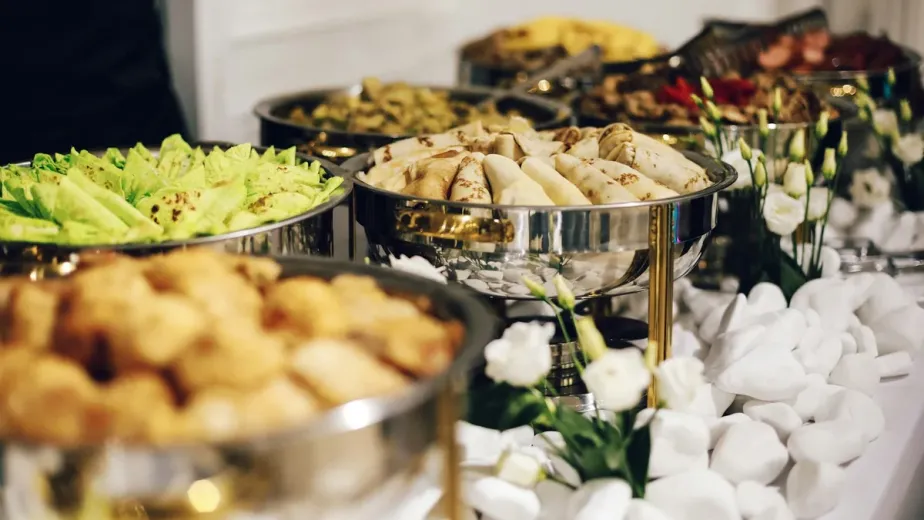
Buffets and cocktail receptions are often confused, but there is a clear difference. At a buffet, long tables are laden with food and guests serve themselves onto plates. At a cocktail reception, the emphasis shifts toward drinks and canapés — small, bite-sized snacks passed around by waitstaff. There is less food, more to drink, and the atmosphere is decidedly more sophisticated.
Events well suited to this format include:
- office, store, or restaurant openings;
- product or service launches;
- press conferences with an informal follow-up;
- partner evenings or client appreciation events;
- corporate celebrations without a lengthy sit-down dinner.
Duration and the Best Time to Hold One
A standard cocktail reception runs between one and a half to three hours. Keeping guests on their feet any longer becomes uncomfortable — people tire, and the energy for conversation fades. If the programme requires more time, a mixed format is worth considering: a cocktail hour followed by a seated dinner for a smaller group.
The ideal start time is between 6:00 and 7:00 PM. Guests arrive after the working day, with an hour or so for free-flowing conversation before the formal portion — a presentation, a word from the director, a ribbon-cutting — after which open mingling resumes. Morning cocktail receptions are less common and typically take on more of a coffee-break character.
Menu: How Much of What Per Guest
A cocktail reception menu is built around finger food — items eaten by hand or with a cocktail pick, with no plate or cutlery required. Portions are small; service is frequent.
Approximate per-guest quantities for a two-hour reception:
- canapés and snacks — 8–12 pieces;
- tartlets, mini sandwiches, and bruschetta — 4–6 pieces;
- mini desserts — 2–3 pieces;
- non-alcoholic drinks — 400–500 ml (water, juice, soft drinks);
- alcohol (if served) — 150–200 ml of wine or 100 ml of spirits.
If the reception replaces dinner, increase quantities by 30–40%. If it accompanies a business programme where guests have already eaten, portions can be scaled back.
Typical menu items include salmon or roast beef bruschetta, cheese and mushroom tartlets, mini burgers, vegetable rolls, a cheese board, a fruit platter, and chocolate truffles. In Dushanbe, clients often incorporate local touches: miniature samboosa, stuffed flatbread, dried fruits — a detail that lands particularly well at international events where foreign partners are among the guests.
Equipment and Space Layout
A cocktail reception does not require banquet tables and chairs. The core equipment consists of:
- Cocktail tables (high tops or bar-height tables) — guests set down their glasses and hold snacks. The rule of thumb is one table per 6–8 guests.
- A bar counter or drinks station — one bartender or server per 30–40 guests.
- Passed trays — waitstaff circulate through the room, with one server covering 20–25 guests.
- A dessert station — a separate table or display that guests approach on their own.
Floor space: for a standing event, a comfortable allowance is 1.2–1.5 square metres per person. For 100 guests, you need a venue of at least 120 square metres. If a presentation stage is planned, add another 20–30 square metres.
Décor is typically minimalist: fresh flowers, branded banners, and atmospheric lighting. This is not a banquet where the table itself is the centrepiece — here the focus is on the space and the mood it creates.
Staffing: Who You Need and How Many
The team composition depends on guest count and programme complexity. A baseline breakdown for a reception of 50–100 guests:
- event manager — 1;
- waitstaff — 3–5 (tray service and bar assistance);
- bartender — 1–2;
- technical crew (setup and breakdown) — 2.
If guests are being registered at the entrance, add a host or hostess. For a complex programme — a show, an auction, or a presentation requiring technical equipment — a dedicated programme coordinator is also advisable.
Common Mistakes When Organising a Cocktail Reception
Experience with events in Tajikistan shows that the same oversights tend to repeat themselves.
- Too little food at the start. Guests arrive hungry and the first round of snacks disappears within fifteen minutes. The fix: a “hot start” — put a cheese board and bread on the tables immediately, then serve hot canapés in waves every 20–30 minutes.
- No non-alcoholic alternatives. Some guests do not drink alcohol. If only wine and champagne are on offer, they feel awkward. Water, juice, a non-alcoholic mojito, or a soft drink should always be available.
- An overly long formal segment. If speeches run 40–50 minutes while guests are standing, people start to leave. Keep it concise: 10–15 minutes for remarks from leadership, no more than 20 minutes for a presentation.
- No coat storage. A cloakroom or coat rack is essential even at a small reception — guests should not have to hold their coats throughout the evening.
- Miscalculating the floor space. A room that is too cramped feels claustrophobic; one that is too large feels empty. Both extremes undermine the atmosphere.
Budget: What Goes into the Cost
A cocktail reception budget is made up of several line items:
- menu (food and drinks per guest);
- equipment rental (tables, tableware, trays, bar counter);
- staffing (waitstaff, bartender, event manager);
- delivery and logistics;
- décor (if included in the order).
Venue hire is typically not part of the catering quote — it is a separate line item. When booking, clarify exactly what is included in a contractor’s proposal: tableware and furniture are sometimes billed as extras.
When comparing quotes, look beyond the bottom line. Pay attention to the per-guest portion allowances, the staffing plan, and what happens to leftover food after the event.
When a Cocktail Reception Is the Right Choice
This format works when the goal of the event is connection rather than a sit-down meal. If you want guests to meet one another, engage with the company’s team, remember the brand, and leave with a positive impression — a cocktail reception will deliver that more effectively than an assigned-seating banquet.
It is also more economical than a banquet for the same number of guests: less food, less furniture, fewer staff. Yet the sense of occasion remains high, provided the service is well executed and the menu is carefully chosen.
If you are planning an opening, a launch, or a business evening in Dushanbe and want to determine which format and budget are right for your event, start with a concrete brief: number of guests, venue, duration, and whether there is a formal programme. With that information in hand, a catering company can give you a precise quote rather than a rough estimate.