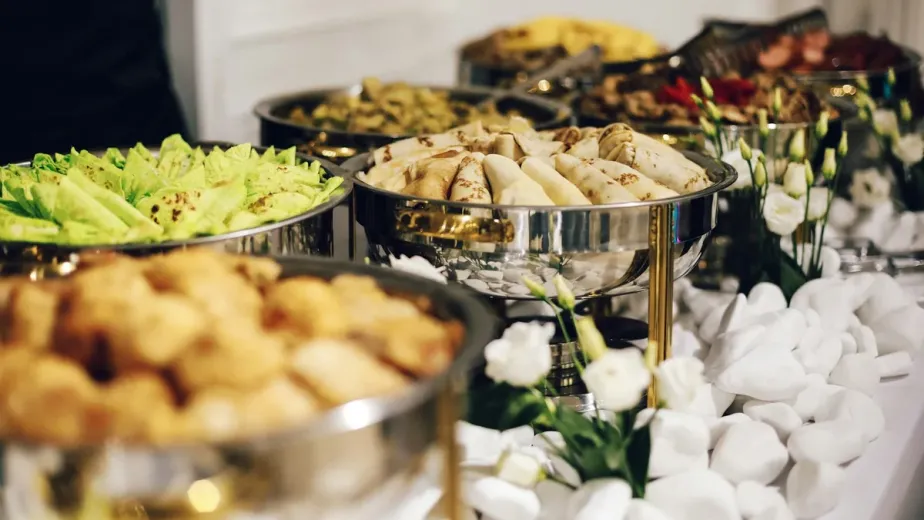

A reception and a banquet are two different scenarios, and the choice between them shapes not only the menu but the budget, the venue and even how much your guests talk to each other. Here is when each one makes sense.
A reception: when conversation matters
Guests stand, the food sits on separate tables, and everything is eaten by hand or with a small fork. The format suits presentations, launches, business meetings and corporate parties without a formal programme.
- The same floor area holds two to three times more guests than seated tables.
- Guests move around and talk – the main advantage for business events.
- The cost per head is usually lower: fewer staff and no large furniture rental.
- It is easy to shorten or extend, because nothing is tied to a serving schedule.
A banquet: when the table is the event
Guests sit at set tables and the dishes are served by waiting staff or laid out in advance. This is the scenario for a wedding, an anniversary, a family celebration or a formal reception.
- More food per guest and a more substantial menu: hot dishes, salads, appetisers, dessert.
- You need furniture, linen, a seating plan and more staff in the room.
- The format keeps guests in place, which suits toasts, speeches and a programme.
- The cost per head is higher, but the event feels more formal.
The combined option
In practice the mixed scenario usually wins: a 30 to 40 minute welcome reception while guests arrive, then the banquet. Nobody stands around hungry waiting for the start, and the main part happens at the tables.
Choosing for your event
- Networking is the point – reception.
- There is a formal programme and toasts – banquet.
- Tight budget with a large guest list – reception.
- Family celebration – banquet, or the combined format.
- Small venue – reception: it needs less space.
If you are unsure, send us the guest count, the venue and the occasion. We will suggest a format and send two quotes so you can compare.