Why a Coffee Break Matters and When to Plan It
A coffee break is a short pause during a business program — a conference, forum, seminar, or training session. Its main purpose is to give attendees a chance to switch gears, have informal conversations, and recharge their focus before the next part of the event.
The standard duration is 15–30 minutes. If the program runs longer than three hours, it’s common to schedule one coffee break in the first half of the day and another after lunch. For a full-day intensive running from morning to evening, plan for two or three breaks plus a separate lunch.
It’s best to lock in coffee break times in the program schedule in advance — this makes it much easier to calculate exact portion counts and coordinate logistics with the catering team.
What a Standard Coffee Break Includes
The exact lineup depends on the event format and budget, but there is a core set you’ll find at most business events in Dushanbe:
- Hot drinks: coffee (Americano or instant) and tea — black and green. Standard allowance: 1.5–2 cups per person per break.
- Cold drinks: still and sparkling water. A minimum of 300–500 ml of water per guest, especially if the room is warm or heavily air-conditioned.
- Pastries and sweets: cookies, petit fours, mini éclairs, muffins, croissants. Standard serving: 2–3 pieces per person.
- Fruit: a platter of seasonal sliced fruit — apples, grapes, citrus. Serving size: 100–150 g per guest.
- Light snacks (optional): sandwiches, canapés, tartlets, cheese platters. These are included when there is more than two hours between the coffee break and the next meal.
For higher-profile events — corporate forums and international conferences — the offering is expanded to include juices, smoothies, yogurts, handcrafted mini desserts, and assorted nuts.
Service Formats
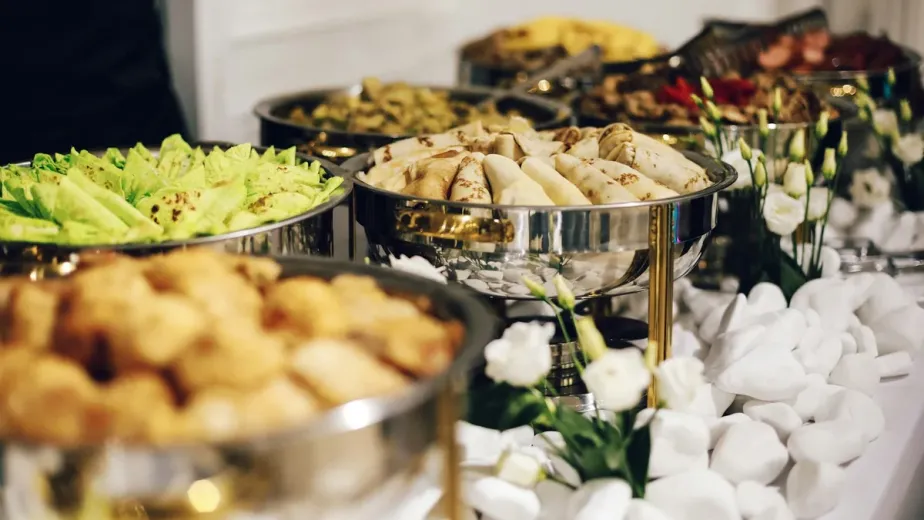
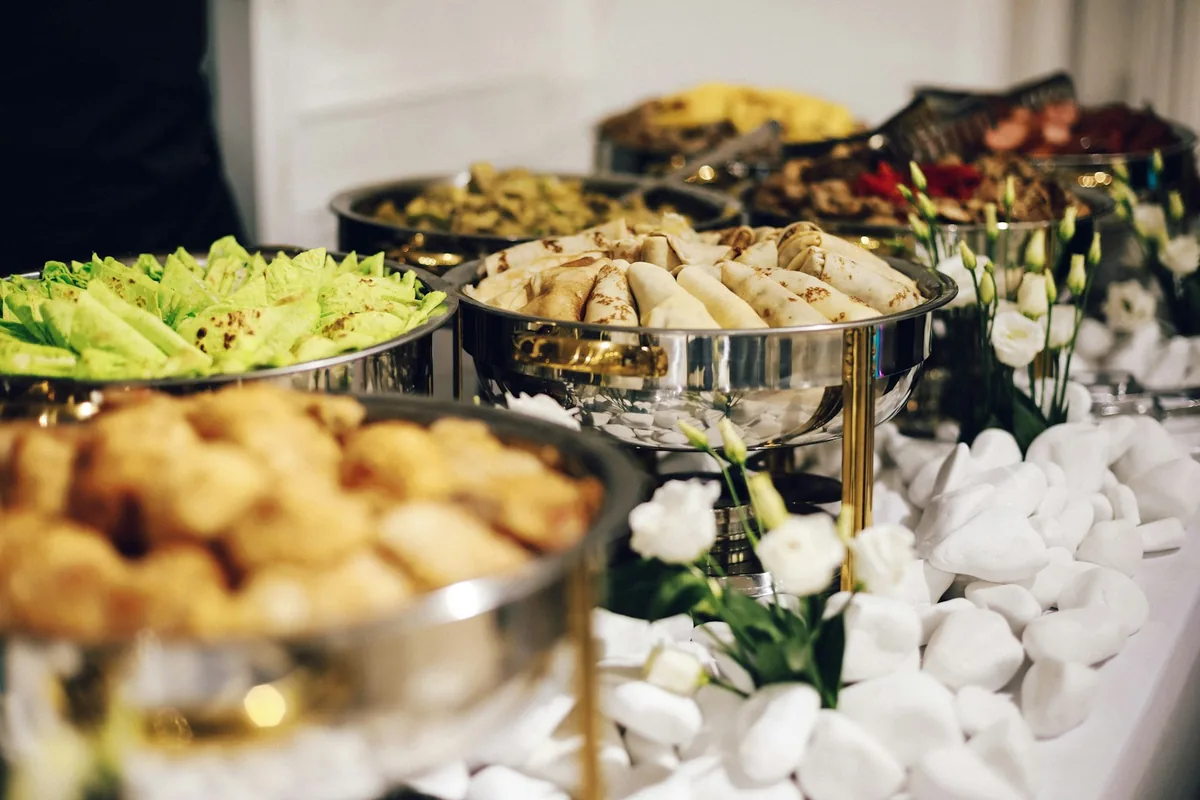
A coffee break is typically set up as a buffet-style station: guests help themselves and mingle standing up. This works well with large numbers of attendees and limited space.
There are two common layout options:
- Central table — a single food and drink zone. Suitable for rooms with up to 80–100 guests. The downside: a queue can form at peak moments.
- Island layout — multiple drink and food stations placed around the perimeter of the room. Reduces congestion, speeds up service, and works well with high guest flow.
Where the venue allows, cocktail tables are placed nearby so guests can set down their cups and chat comfortably.
How to Calculate Food and Drink Quantities
Approximate per-guest allowances for a single coffee break (30 minutes):
- Coffee / tea — 1.5–2 servings (250 ml cup)
- Water — 300–500 ml
- Pastries — 2–3 pieces, approx. 80–100 g
- Sliced fruit — 100–150 g
- Sweets (candy, chocolate) — 30–50 g
- Light snacks (if included) — 3–4 canapés or 1 sandwich
For events with an early morning start (registration from 8:30–9:00 a.m.), increase the pastry and sweet allowance by 20–30%: attendees typically haven’t had time for breakfast at home.
If vegetarian guests or guests with gluten or lactose intolerance are expected, this should be confirmed in advance and separate items prepared. A catering company can provide clearly labelled dishes for dietary requirements.
What Drives the Cost of a Coffee Break
The final price depends on several factors:
- Menu composition. A basic spread (coffee, tea, water, cookies, fruit) costs considerably less than an expanded menu with canapés, juices, and desserts.
- Number of guests. For smaller groups (under 30 people), the per-guest cost tends to be higher due to fixed staffing and equipment expenses.
- Staff. As a rule of thumb, one server is needed per 30–40 guests. If coffee is prepared on-site (espresso machine, barista), that is a separate line item.
- Equipment rental. Thermoses, coffee machines, crockery, tablecloths, and serving stands all factor into the budget if the venue does not supply them.
- Logistics and delivery. The distance from the catering depot to the venue, complexity of access, and working hours all affect the final cost.
The approximate price range for a coffee break in Dushanbe is 80 to 250 somoni per person, depending on what is included. An accurate figure can only be provided after the menu, guest count, and event details have been confirmed.
Common Coffee Break Mistakes to Avoid
- Underestimating drink quantities. Tea and coffee go quickly — especially in the first 10 minutes. It’s better to over-order slightly than to end up with empty thermoses halfway through the break.
- Too little space around the serving table. One station for 100 guests is a recipe for queues. Discuss the layout with the event organiser in advance.
- Ignoring dietary needs. A single standard-menu table doesn’t work for guests with restrictions. These should be identified at the registration stage.
- Poor timing coordination. The catering team needs the exact event schedule so the table is ready at the start of the break — not by the end of it.
- Skimping on tableware. Paper cups are acceptable, but at higher-profile events they look careless. Porcelain or quality premium disposables are both perfectly appropriate choices depending on the event’s standing.
What to Confirm with Your Catering Company Before Booking
To receive an accurate quote and avoid last-minute surprises, have the following information ready:
- Date and venue address
- Number of attendees
- Number of coffee breaks and their approximate times
- Whether the venue has a kitchen, electricity, and running water on-site
- Menu preferences (standard, extended, dietary options)
- Whether tableware and equipment need to be provided by the caterer or the venue
The more precise the information you provide, the more accurate the estimate — and the fewer unpleasant surprises on the day of the event.